Merge Clash: Tower Defense TD
- 4.5
- Rating
- 500.00K
- Installs
- Free
- Price

 Analysis by App-foxy
My first few minutes with Merge Clash: Tower Defense TD were easy to understand but not completely effortless to master. It presents itself as a strategy game built around defending against enemy waves, yet the interesting part is how quickly a simple placement decision can become a problem of timing, space, and priorities. I found myself starting casually, then paying much closer attention once several threats arrived together.
The game comes from Puzzle Cats and is free to start, with optional in-app purchases ranging from $0.99 to $99.99 per item. It is rated for Everyone, runs on Android 7.1 and later, and its current version is 14.6. Those details make it broadly accessible, although the purchase range is worth keeping in mind if you prefer games that never put spending pressure near the center of progression.
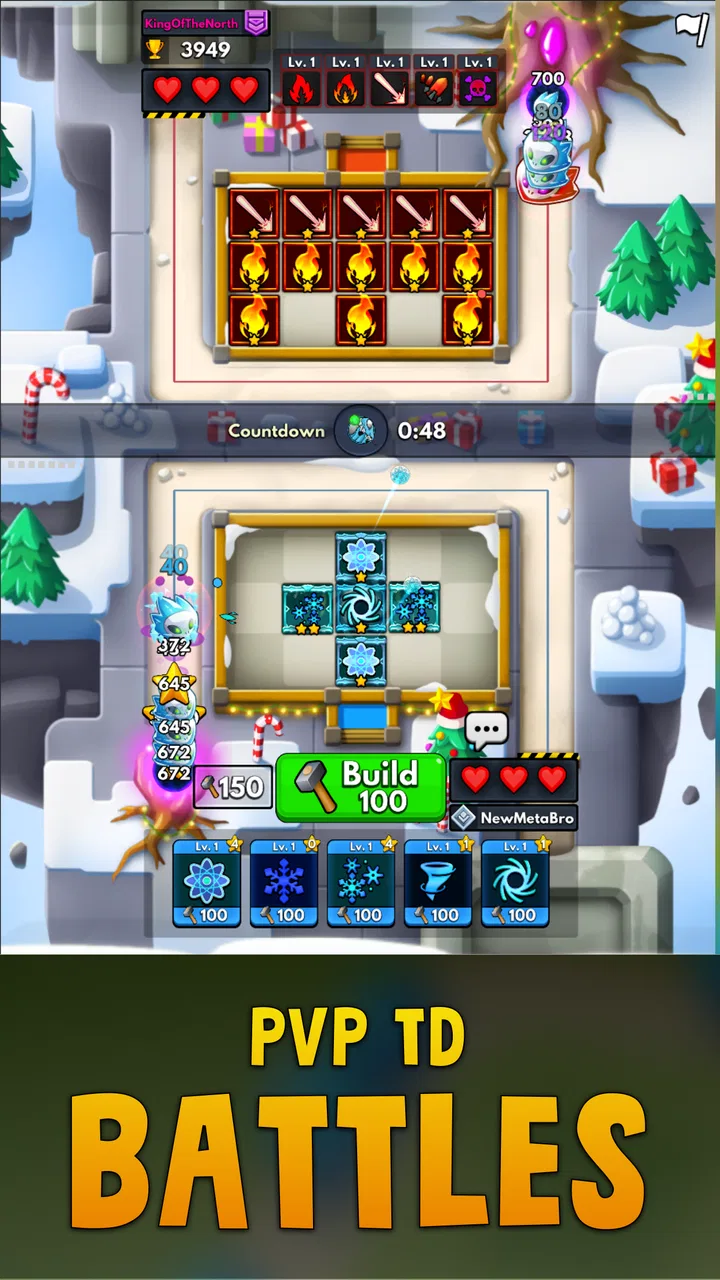
What makes this worth discussing is not simply the familiar tower-defense setup. The visual presentation, compact matches, and merging-focused decisions work together to create a bright, active mood. I would not call it a deeply atmospheric strategy epic, but it does give each wave a clear sense of movement and urgency without becoming visually gloomy or overly serious.
You May Also Like

 Blood Strike: 2.5 Anniversary
Blood Strike’s Loadouts Turn Every Drop Into a Tactical Gamble
A close look at Blood Strike’s custom loadouts: how fast access to signature weapons reshapes its battle royale rhythm, rewards preparation, and narrows the gap between fights.

 Pandora - Music & Podcasts
Pandora’s Music Is Easy to Start, but Harder to Recover
Pandora’s strength is its low-effort path from a seed to a station. Its weak spot is how much confidence it asks you to place in connection, setup, and quiet recovery.

 8 Ball Pool
 Is Built on Rivalries, Rematches, and Routine
A close look at the rivalries, rematches, shared routines, and unanswered safety questions that turn a quick pool match into a persistent mobile community.

 Samsung Music
’s Quiet Strength Is Playing What You Already Own
Its reach comes less from spectacle than from dependable access to a personal library. That simplicity is both the app’s strongest retention engine and its ceiling.

 AccuWeather: Weather Radar
AccuWeather Review: A Quick, Clear Forecast for Everyday Decisions
For everyday plans, the best forecast is the one you can understand quickly. AccuWeather makes rain timing, radar, and local conditions easy to act on, with a few trade-offs.

 Hill Climb Racing
Why Hill Climb Racing Still Turns Crashes Into One More Run
A tiny car, a bumpy hill and one more upgrade: Hill Climb Racing keeps resurfacing because its simple chaos makes every near-miss feel personal.
More From Our News Desk
View All News


How the presentation shapes the first impression
I found that the presentation does more than make the battlefield look friendly: its clarity helps me spot which decisions deserve attention before a wave gets busy. In this section, I look at how that readable style welcomes new players while setting expectations about the game’s lighter, less story-driven world.
A friendly battlefield with a clear purpose
The art direction is immediately readable. Towers, enemies, and the defensive space are designed to communicate their roles quickly, which matters in a game where hesitation can cost control of a wave. I never felt that the screen was trying to impress me at the expense of understanding what was happening. The overall look supports short sessions because I can glance at the battlefield and return to the decision in front of me.
That clarity also affects the mood. The game feels playful rather than threatening, even when the enemy pressure increases. This is a good match for a tower-defense title aimed at a general audience and carrying an Everyone age rating. Younger players can approach it without a harsh visual tone, while older players can still appreciate the satisfaction of arranging a defense and watching it handle incoming pressure.
The setting is less important than the battlefield language. I did not come to this game for a large story or a richly explained world. I came for the repeated question of whether my current arrangement would survive. The absence of narrative weight keeps the focus on the board, but it also means players looking for characters, lore, or a campaign with dramatic storytelling may find the experience lightweight.
Why the merge idea changes the usual tower-defense feel
Traditional tower-defense games often ask me to choose a location, select a defensive unit, and gradually improve it. Here, the merge concept gives the early decisions a more tactile quality. Instead of treating every tower as a permanent piece of infrastructure, I am encouraged to think about combinations and upgrades as part of the active puzzle.
That creates an important trade-off. A merge can make the board stronger, but it can also reduce the number of separate positions I control. In a quiet moment, combining pieces may look obviously beneficial. During a crowded wave, however, keeping several active defenders can be safer than chasing a stronger individual unit. I learned to stop merging automatically and first ask whether the current coverage was already doing useful work.
The strongest habit is to treat every merge as a timing decision, not just an upgrade. If I combine pieces too early, I may gain power in one place while leaving another route or target type less protected. If I wait too long, the board can become cluttered and the next wave may arrive before I have enough room to reorganize. That tension gives the simple visual idea more strategic value than the store summary suggests.
Readable action, limited visual depth
The bright presentation helps the game remain approachable, but it also sets a limit on how much emotional variety the setting can provide. The battlefield communicates activity and danger, yet it does not try to create a haunting, cinematic, or story-driven atmosphere. For me, that is acceptable because the mechanics are the main attraction. Still, a player who prefers richly themed tower defense with elaborate environments may find this style too restrained.
I also think the visual clarity is most useful when I play in short bursts. The game does not require me to memorize a complicated fictional universe before understanding the objective. I can return after a break and quickly reconnect with the central task: arrange the defense, manage the merge opportunities, and respond to the next wave.
Sound, pacing, and the feeling of each wave
The audio and the rise in enemy pressure give a match its pulse, but I judge the pacing by how well it leaves room to think between urgent moments. Here, I consider when that rhythm suits a quick break and when it may be wiser to wait until I can give a wave my attention.
Audio as a guide to pressure
The sound design works best as a rhythm setter rather than as a separate attraction. In a tower-defense game, audio should help me feel when the battlefield is calm, when attacks are connecting, and when the pressure is building. That kind of feedback makes the action easier to follow without forcing me to stare at every part of the screen at once.
I would not choose this game primarily for its soundtrack. Its appeal comes from the interaction between visual movement and defensive decisions, not from a memorable musical identity. The audio supports the loop, but the game remains perfectly understandable through its board activity and wave structure. That makes it suitable for quick play when I want a focused distraction rather than an immersive audio experience.
Short bursts of urgency
The pacing is built around escalation. A wave begins with enough breathing room to inspect the board, then the need to react becomes more immediate as enemies advance. This rise in pressure gives the game a practical rhythm: prepare, observe, adjust, and recover if the defense holds.
That rhythm is especially useful in an everyday situation. If I have a few minutes while waiting for an appointment or taking a short break, I can open the game and engage with a complete defensive problem without needing to commit to a long narrative chapter. The catch is that “short” does not always mean “relaxed.” A wave can begin casually and then demand more attention than expected, so I would avoid starting one when I know I will need to put the phone down immediately.
The pacing also makes mistakes feel instructive. When a defense fails, I can usually think back to a recognizable choice: I merged too soon, left a weak position in place, or focused on improving one area while ignoring the overall shape of the board. That is more satisfying than losing because the game suddenly hides the rules from me.
Where the rhythm can become repetitive
Because the core loop returns to enemy waves and defensive adjustments, repetition is part of the design. Players who enjoy refining a familiar system will see that repetition as practice. Players who need constant new mechanics, dramatic story turns, or changing objectives may feel the rhythm flatten over longer sessions.
My advice is to treat it as a focused strategy snack rather than a game that must occupy an entire evening. The presentation supports that approach. The cheerful art, straightforward battlefield, and wave-based tempo make it easy to play in small intervals, while the merge decisions provide enough thought to prevent those intervals from feeling completely passive.
How the mechanics fit the mood
The game’s cheerful tone works because the mechanics ask for alert choices without making the experience feel severe. I’ll look at how merging, positioning, and the need to preserve options create a more thoughtful loop than the light presentation first suggests, along with the limits of that focused approach.
Simple entry, meaningful attention
The basic premise is accessible: defend against incoming enemies by arranging and improving your available forces. That makes the game approachable for someone who has not spent much time with tower defense. I did not need a long explanation to understand what I was trying to protect or why stronger defensive combinations mattered.
The deeper challenge comes from making good choices under limited attention. The board can look stable one moment and suddenly require a decision about positioning, merging, or preserving coverage. I found that the game rewards observation more than frantic tapping. The best move is often the one that keeps several future options open rather than the one that produces the biggest immediate improvement.
One useful approach is to divide each wave into three mental stages. At the beginning, I check whether the current arrangement covers the important approach areas. In the middle, I avoid spending every merge opportunity just because it is available and watch for the point where enemy pressure changes. Near the end, I prepare for the next wave instead of assuming that surviving the current one means the board is already optimal.
The hidden cost of chasing stronger pieces
The merge mechanic encourages a natural instinct: combine whenever possible. That instinct is not always correct. A stronger piece may be more efficient, but two separate pieces can provide wider coverage or allow me to respond to enemies arriving from different directions. This is the kind of trade-off that gives the game its strategy identity.
I also found that board space has practical value. Keeping too many low-impact pieces can make the arrangement harder to read and leave fewer opportunities for improvement. On the other hand, merging everything into a compact group can make the defense fragile if the wave demands coverage rather than concentrated strength. The right balance changes with the situation, which is why copying a single preferred arrangement is less reliable than learning to read the pressure.
For new players, the safest rule is to merge with a purpose: improve coverage, answer a threat, or prepare the next wave. If a merge does none of those things, waiting can be the more strategic choice. That small change in mindset turns the game from a sequence of obvious combinations into a series of decisions with consequences.
Who will enjoy it and who may not
I think the game is a good fit for players who like compact strategy loops, visible progress during a battle, and the satisfaction of improving a setup through combinations. It is also suitable for someone who wants tower defense without committing to a large, complicated system immediately. The Everyone rating and modest Android requirement make it an easy recommendation for a broad audience, provided the player is comfortable with optional purchases.
I would be more cautious recommending it to someone who wants a purely relaxed idle experience. Even though the presentation is friendly, the wave structure still asks for attention. It is also not my first choice for a player seeking a detailed campaign, extensive world-building, or a highly competitive multiplayer environment. The game’s identity is concentrated on its merge-and-defend loop, and that focus is both its strength and its boundary.
How it compares with familiar alternatives
Compared with classic tower-defense games that emphasize fixed lanes, carefully planned upgrade trees, and long-term map mastery, this one feels more immediate. The merge system puts more emphasis on the current board and the timing of combinations. That makes it easier to pick up, but it may offer less of the slow, architectural satisfaction found in games where I design an elaborate defense over a large map.
Compared with idle defense games, it feels more hands-on. I cannot simply rely on passive growth and ignore the battlefield; the arrangement still matters. That makes each wave more engaging, although it also means the game is less suitable when I want something that plays almost entirely in the background.
Compared with puzzle games built around merging alone, the defensive objective gives each combination a reason to exist. I am not merging only to create a larger piece. I am merging because the next wave may punish an inefficient board. That connection between puzzle action and survival is what gives the game its clearest personality.
Purchases and practical expectations
The game is free to download and play, but optional purchases are part of the experience, with individual items priced from $0.99 to $99.99. I would approach those purchases carefully and decide in advance whether I am comfortable spending. The broad range means the game can remain accessible to someone who never buys anything, while players who want to spend more have that option available.
My practical recommendation is to play long enough to understand whether the central loop itself is enjoyable before considering any purchase. If the act of arranging, merging, and surviving waves is not satisfying on its own, spending will not solve that problem. If the loop does work for you, setting a personal limit can keep the free-to-play structure from distracting from the strategy.
Final thoughts on the atmosphere and staying power
Merge Clash: Tower Defense TD creates a coherent mood by keeping its visuals friendly, its battlefield readable, and its pacing focused on rising wave pressure. The sound and animation serve the action rather than overwhelming it, while the merge system gives familiar tower defense a more active puzzle layer. I enjoyed that balance because the game feels approachable at first but still rewards better timing and more disciplined choices.
Its limitations are equally clear. The presentation is not built around deep storytelling, the loop can become repetitive for players who need constant novelty, and the optional purchase range deserves attention from anyone trying to keep spending strictly controlled. The game also asks for more involvement than a passive idle title and offers less elaborate planning than a traditional, map-heavy tower-defense game.
The audience response is encouraging: it holds a 4.5 average from around 5.8 thousand ratings, with more than 500 thousand installs. Those figures do not replace personal taste, but they fit my impression that the game has found a solid audience for its compact strategy format. Puzzle Cats has kept the concept direct instead of burying it under unnecessary complexity.
For me, the best way to play is in deliberate short sessions. I enter with a simple plan, watch how the enemy wave changes the value of each position, and resist merging merely because the option is visible. That approach lets the art and sound maintain a pleasant rhythm while the mechanics provide enough tension to keep me involved.
If you want a colorful, free strategy game where merging decisions directly affect survival, I think this is worth trying. If your ideal game is a rich story adventure, a completely hands-off idle app, or a deep simulation with extensive long-term construction, I would look elsewhere. Its real strength is the meeting point between approachable presentation and small but meaningful tactical choices.
FAQs for Merge Clash: Tower Defense TD
01What is Merge Clash: Tower Defense TD?
Merge Clash: Tower Defense TD is a strategic mobile game where players build and upgrade towers to defend against waves of enemies. By merging identical towers, you enhance their power and abilities. The game combines elements of strategy and puzzle-solving, making it engaging for players who enjoy tactical challenges.
02How does the merging mechanic work in Merge Clash?
In Merge Clash, players can merge two identical towers to create a more powerful version. This not only increases the tower’s attack power but can also unlock special abilities. The merging mechanic adds a layer of strategy, as players must decide when and which towers to merge for optimal defense.
03Is Merge Clash: Tower Defense TD free to play?
Yes, Merge Clash: Tower Defense TD is free to download and play on both Android and iOS platforms. However, it offers in-app purchases, allowing players to buy items, upgrades, and other enhancements. These can provide advantages but are not necessary to enjoy the full game experience.
04What are the main features of Merge Clash?
Merge Clash features various levels with increasing difficulty, a wide range of towers and upgrades, and unique enemy types that require strategic planning. Players can also enjoy daily challenges and events that offer rewards. The game’s vibrant graphics and intuitive controls make it accessible and enjoyable for all ages.
05Does Merge Clash require an internet connection?
Merge Clash can be played offline, allowing players to enjoy the game without an internet connection. However, certain features, such as daily events and leaderboard rankings, do require online access. Playing offline means you won’t be able to access these features until you reconnect.
Pros
- Engaging gameplay with strategic depth.
- Visually appealing graphics and design.
- Frequent updates keep the game fresh.
- User-friendly interface for easy navigation.
- Strong community support and active forums.
Cons
- Occasional in-app purchase prompts.
- Requires constant internet connection.
- Can be repetitive over time.
- Limited customization options for towers.
- Ads can be intrusive during gameplay.

Merge Clash: Tower Defense TD
Gallery